
Thelma does not appear in any ancient parish registers, medieval calendars, or traditional saint lists. This feminine name emerged in written language at the end of the 19th century, carried by a British novel that became a bestseller. Its journey, between literary creation, Anglo-Saxon success, and recent rediscovery in France, deserves attention.
Thelma, a name born in a novel from 1893
Unlike most classic names, Thelma does not have a clearly documented ancient root. The name is a literary invention: it was the British writer Marie Corelli who first used it as a heroine’s name in her novel Thelma, published in 1893.
This book told the story of a young Norwegian woman facing Victorian English society. The commercial success of the novel propelled the name into English-speaking households, first in Great Britain and then in the United States.
The often-cited etymology refers to the ancient Greek thélêma, which means “will.” Have you read this explanation on other sites? It is actually still debated. Other hypotheses link Thelma to Velma, Wilhelmina, or Germanic roots. No unique linguistic lineage has reached consensus among specialists. A detailed article on the name Thelma on Le Paris des Lardons explores these various etymological paths.
Popularity of Thelma in France and the United States
The name has experienced very different trajectories depending on the country. In the United States, Thelma was widely given in the early 20th century before gradually declining. Data from the Social Security Administration indicate only 29 births in 2025, placing the name at rank 4,745.

In France, Thelma remained almost nonexistent for decades. Its recent rise is part of a broader trend: French parents are seeking short, sweet, and uncommon names. The INSEE name file allows tracking this evolution department by department.
However, the name remains modest in volume compared to major classic feminine names.
Saint Thelma and name day
Thelma does not have an official patron saint in the Catholic calendar. The associated feast is generally set for June 26, linked to Saint Anthelme of Chignin, a Carthusian from the 12th century originally from Savoy.
Why this connection? Because some linguists consider Thelma to be a derivative of Anthelme, constructed from the Germanic roots ans (name of a deity) and helm (helmet, protection). This link remains more of a convention than a historical certainty.
Other similar names share this same connection:
- Anselme, which shares the Germanic root ans and is also celebrated in connection with Carthusian tradition
- Selma, often presented as a diminutive of Anselme in Scandinavian countries
- Telma, a spelling variant used in Portugal and Brazil
Thelma in popular culture: much more than a film
The most immediate cultural reference remains the film Thelma & Louise, directed by Ridley Scott in 1991. Geena Davis plays Thelma Dickinson, a housewife who hits the road with her friend Louise.
The feature film has transcended the simple status of a road movie. It has been reinterpreted as a work on female emancipation, sexist violence, and reclaiming control. Its influence is still discussed in the media more than thirty years after its release, and a stage adaptation has been presented at the Young Vic in London.
Other personalities have borne this name:
- Thelma Houston, a singer known for her song Don’t Leave Me This Way
- Thelma Coyne Long, an Australian tennis player who made her mark in Grand Slam tournaments
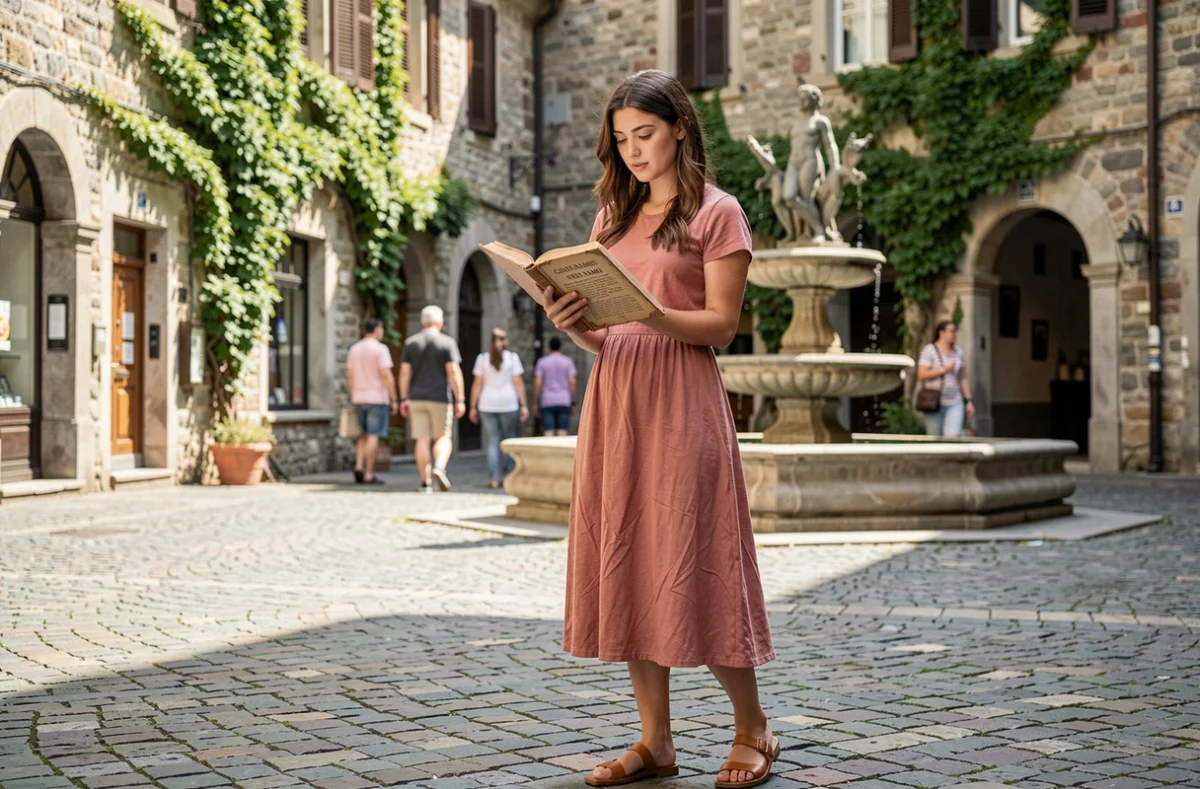
Choosing Thelma: what this name says about parental choice
Choosing Thelma means opting for a name that does not come from a classic family heritage or a popular saint. It is a character name that has become a personal name through gradual adoption.
Its short sound (two syllables, five letters) places it in the same phonetic family as Alma, Selma, or Elma. These short names ending in -a dominate recent trends in France, according to data published by INSEE.
The etymological ambiguity surrounding Thelma may appeal to parents who prefer an open name, without too rigid a meaning. The sense of “will” remains a possible interpretation, but not the only one. This ambiguity is part of the identity of the name: born from a novel, shaped by cinema, it belongs more to cultural imagination than to a fixed religious or linguistic tradition.