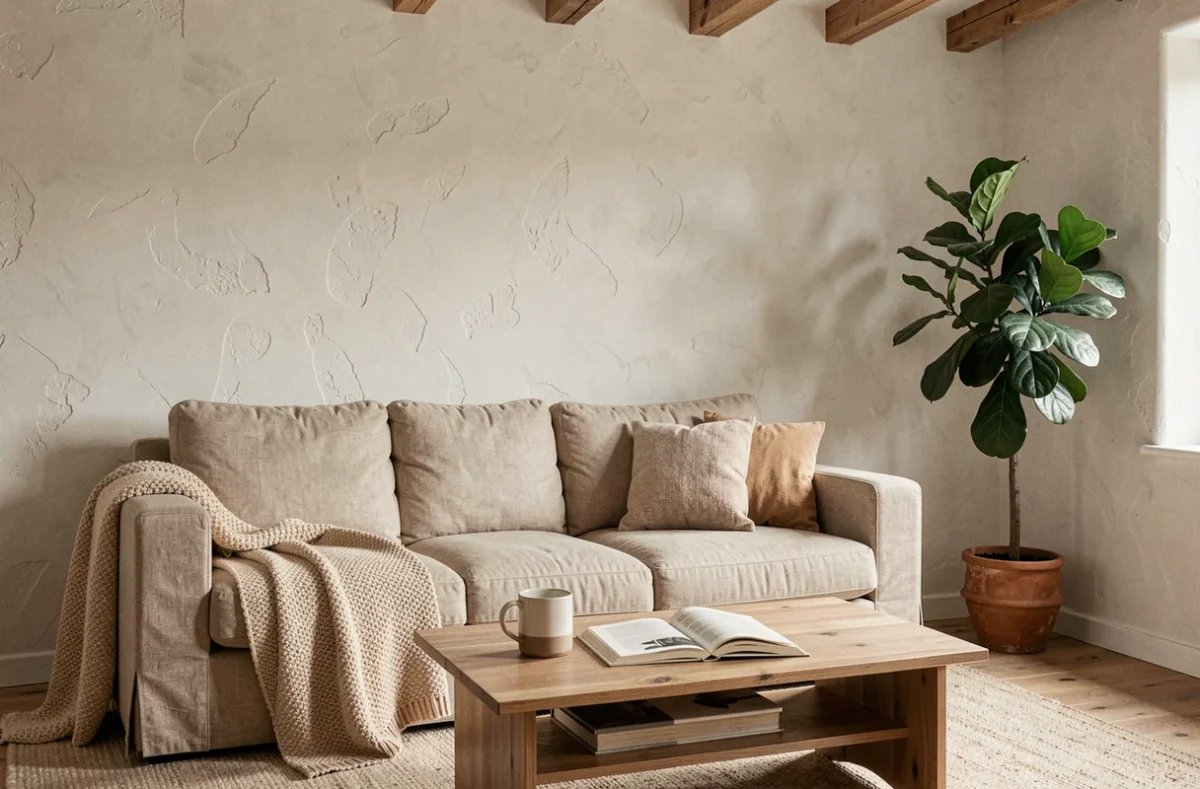
A cushion on a sofa won’t make much difference if the room is poorly laid out or the lighting is flat. Creating a warm interior is less about accumulating objects than making a few thoughtful choices about light, materials and how people move through the space. These choices work just as well in a small apartment as in a large house, as long as you understand why they have an impact.
Color temperature and lighting: what really makes a room feel warm
Have you ever noticed that a living room can feel cold even with ochre-painted walls? The reason often comes down to the lighting. A cool white bulb (above 4,000 kelvins) cancels out the effect of warm wall colors. By contrast, lighting between 2,700 and 3,000 kelvins warms up any room, even one painted white.
The idea isn’t to add more lamps, but to create several layers of light. A single ceiling light produces flat, uniform illumination. Add a table lamp on a low piece of furniture and a reading lamp beside the sofa, and you’ll create areas of soft shadow that give the room depth. It’s this contrast between brighter and more subdued areas that creates a cozy living room atmosphere.
Before repainting or buying furniture, simply try changing the bulbs. The difference is often more noticeable than adding a new cushion. When looking for home decorating tips, you’ll often come across color palettes, but rarely this technical detail that affects everything else.
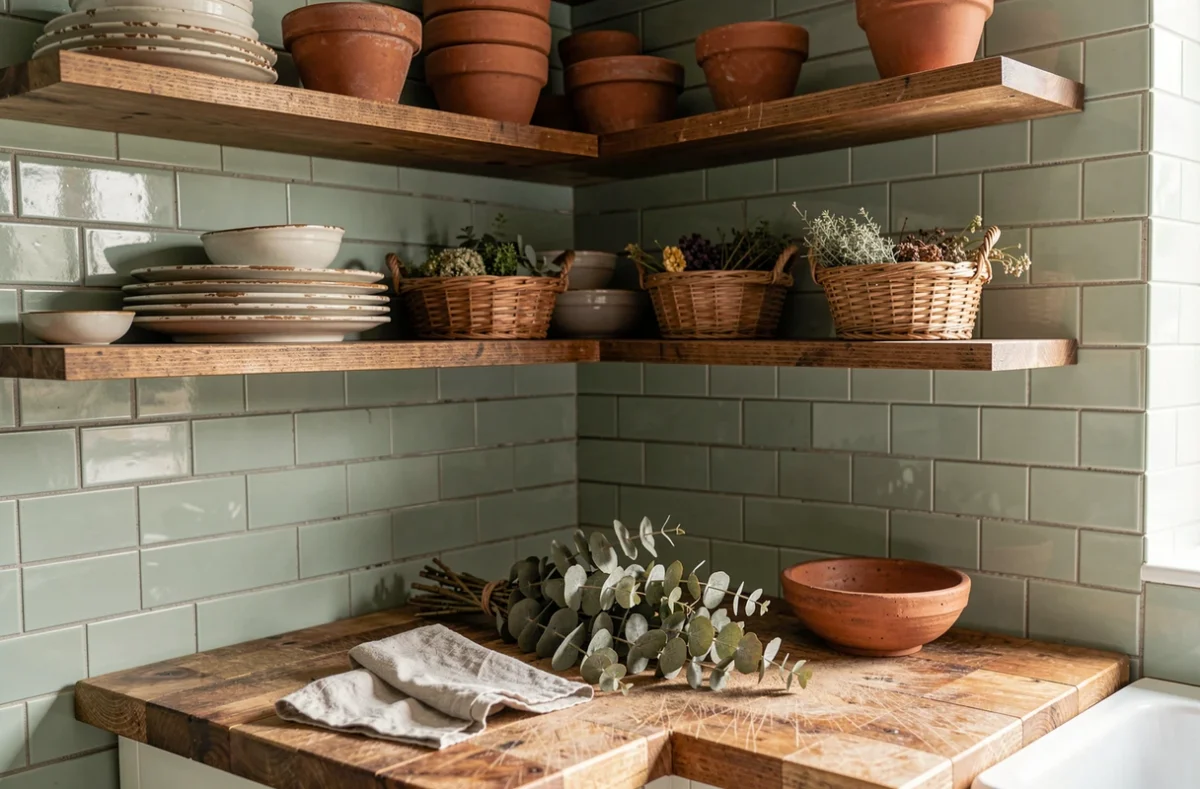
Natural materials and textiles: creating a room you want to touch
Wood, linen, wool, washed cotton and handmade ceramics all have one thing in common: they absorb light rather than reflecting it harshly, which softens the atmosphere of a room. A tabletop made from unfinished oak reflects light differently from a lacquered glass one.
Mixing textures matters more than mixing colors. A corduroy sofa, a jute rug and a chunky wool throw: these different surfaces catch the light in different ways, adding visual richness without relying on a range of colors. The palette can stay understated; the materials do the work.
How to layer textiles without making a room feel cluttered
Why do some rooms feel cluttered despite having very little furniture? Often, it’s because the textiles have built up without any clear plan. A simple rule works well: one substantial textile per area, complemented by one or two lighter accessories. For example, a thick rug on the floor is enough, paired with a throw over the armrest and a cushion.
- On the floor, a natural-fiber rug (jute, wool or braided cotton) defines the living area and absorbs sound, improving acoustic comfort as well as the look of the room.
- On the sofa, a linen or lightweight wool throw adds texture without too much bulk, and is easy to put away when you no longer need it.
- At the windows, thick cotton or washed linen curtains filter the light and create a cocooning feel, as long as they aren’t pressed against a cold or damp wall.
This last point deserves attention. In a poorly ventilated home, a thick curtain pressed against an exterior wall can encourage condensation. Decorating is no substitute for proper ventilation: it’s best to check that your mechanical ventilation system is working properly before dressing the windows.
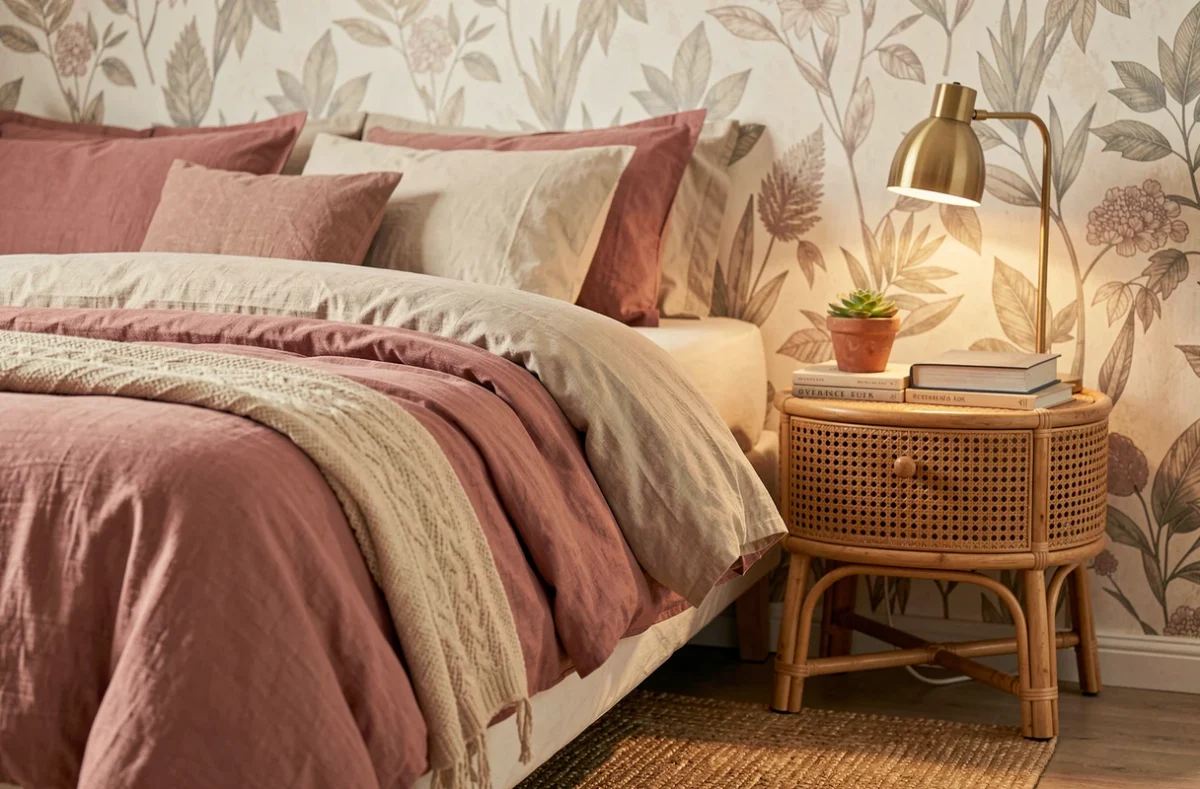
Flow and proportions: open space as a design feature
A harmonious interior isn’t just about what you put in it. What you leave out matters just as much. Being able to walk through a room without going around a piece of furniture, seeing the floor between the sofa and coffee table, and leaving a section of wall bare: these open spaces create a visual rhythm that gives the eye a rest.
In practical terms, it’s best to place the main living room furniture (sofa, coffee table and TV stand) first, before adding any accessories. Starting with the larger pieces helps you avoid the trap of gradually accumulating too much. Then you can decide whether the room needs another seat or a small occasional table, rather than adding one automatically.
Choose furniture to suit the room’s actual size
A corner sofa can be tempting, but in a modest-sized living room, it takes up valuable floor space and throws off the proportions. A two- or three-seater sofa paired with a separate armchair offers just as much seating while leaving room to move around. The coffee table, meanwhile, should be no more than two-thirds the length of the sofa to maintain visual balance.
The same principle applies to the dining room. A table that’s too large for the space forces you to push the chairs against the wall. If someone has to get up to let another person pass, the table is probably oversized.
Colors and harmony: choosing a palette that stands the test of time
Color trends change quickly. Sage green or terracotta may look appealing on a screen, but can become tiring after a few months if they cover every wall. A more lasting approach is to keep large surfaces (walls, floors and major furniture) in neutral tones and save bolder colors for elements that are easy to change.
- Off-white, beige or light gray walls provide a base that works with almost any accent color.
- Cushions, vases, picture frames and small decorative objects bring in brighter colors. They can be replaced without renovations or a big budget.
- One accent wall is enough to give a room character. Two differently colored walls in the same space can create visual confusion.
Limiting your palette to three shades per room (one dominant, one secondary and one accent) makes decisions easier and helps create a cohesive look from room to room.
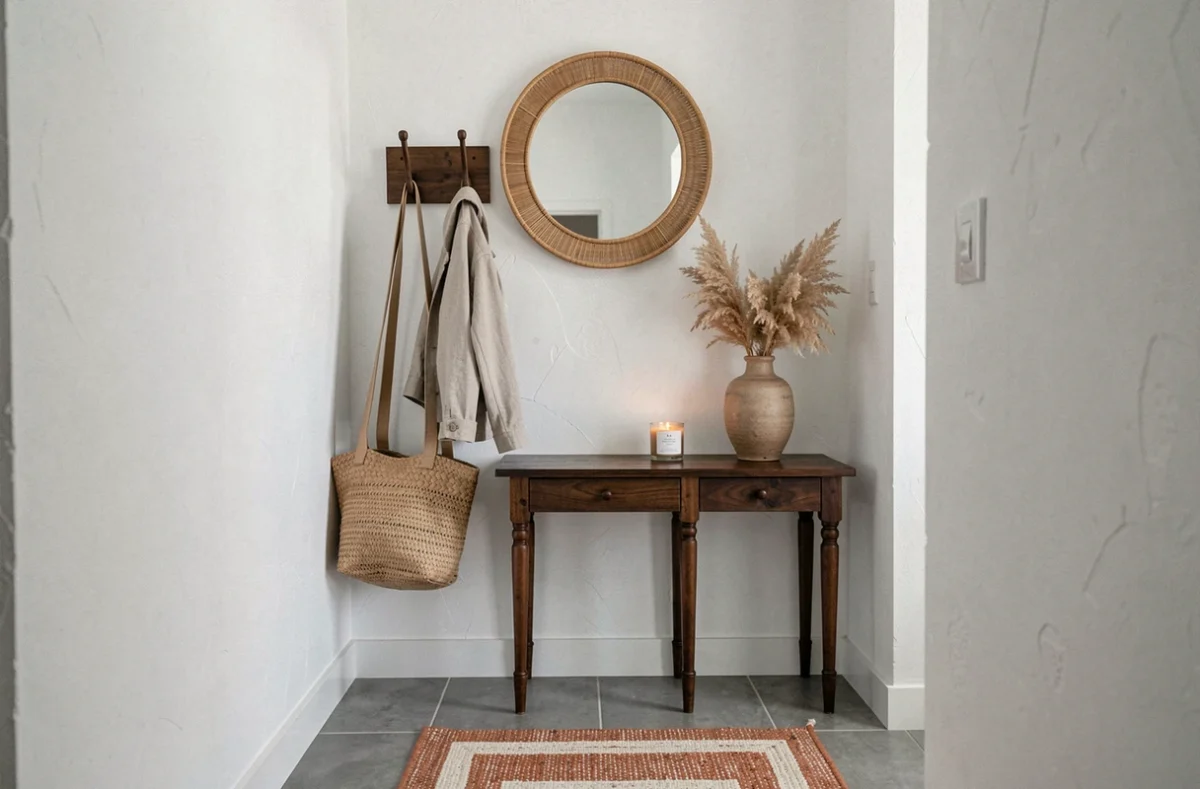
A comfortable interior comes down to a few simple decisions that work together: lighting with the right color temperature, materials you enjoy touching, clear space to move around in, and a restrained color palette that ages well. These four elements complement one another. Changing just one, even in a small way, can transform how a room feels in just a few hours.