
Twice as many patents filed in five years: the electric mobility sector is not slowing down, it is accelerating. Automotive manufacturers are now focusing more on battery design than on internal combustion engines, redefining their historical priorities. However, despite this momentum, the massive installation of ultra-fast charging stations faces technical barriers and legislation that is sometimes out of sync with the reality on the ground.
The entire ecosystem is adjusting to unprecedented business models. Companies from consumer electronics or energy are joining the table, shaking up established positions. Political choices, often contradictory, stimulate creativity while injecting a degree of uncertainty among investors.
You may also like : Discover the latest innovations and tips for maintaining your car
Electric mobility in the era of global growth: market status and dynamics
It is impossible to ignore the rise of the global market for electric mobility. The year 2023 marks a turning point: over 14 million electric vehicles and plug-in hybrids sold worldwide, across all continents. France continues its trajectory, showing a 47% increase over twelve months for new registrations. This momentum is shared by European countries, supported by incentive measures and increasing pressure on CO2 emissions.
Traditional automakers are accelerating their transformation. Announcements of 100% electric models are coming in succession. Supply chains are being reinvented around batteries and strategic minerals. Reducing greenhouse gases becomes a guiding principle, but the price issue persists. The gap between electric cars and combustion engines is slowly narrowing, which still limits mass adoption in certain market segments.
Further reading : Stay informed: follow all the trends and news in the real estate market
The European Union is paving the way with a clear timeline: the sale of new internal combustion engine cars will stop in 2035. A decision that disrupts the entire automotive sector, as well as the energy ecosystem: increased development of charging infrastructure, rise of smart grids. To decipher these changes and anticipate upcoming trends, evmag.fr EV Mag – Webzine 3.0 offers a sharp perspective on the mobility of tomorrow.
Plug-in hybrid electric vehicles are carving out their niche: they reach 23% market share in the European Union in the first half of 2023. But the dynamics are not uniform. Norway and the Netherlands are leading the way; Southern Europe is progressing at its own pace. Challenges remain to ensure a fair and sustainable growth of electric mobility across the continent.
What are the drivers of innovation in electric vehicles and infrastructure?
The rise of electric mobility relies on a series of technological advancements. Evolving lithium-ion batteries are the foundation of this revolution. Their energy density is improving, the range of electric vehicles is increasing, and manufacturing costs are being reduced thanks to research and industrialization.
Charging infrastructure is keeping pace. The proliferation of charging stations, both in public and private spaces, is transforming urban landscapes and travel habits. Companies like Nexans are investing in increasingly intelligent, connected, and reliable networks. Fast charging points are becoming a key factor, allowing long distances to be covered without constraints and reassuring new users.
Intelligent management of electric vehicle charging is becoming a priority. Remote control systems, real-time analysis of energy flows, and integration of renewable energies open up unprecedented perspectives. Bidirectional charging is starting to take hold: now, the car is no longer just a means of transport but an active participant in the electrical grid, capable of returning energy when needed.
Finally, the sustainability of batteries and the recycling of strategic materials are at the heart of industrial debates. Research on the second life of batteries and the search for alternatives to rare metals are shaping a future where innovation extends to all stages of the lifecycle, from design to end-of-life. This is how electric mobility is anchored for the long term.
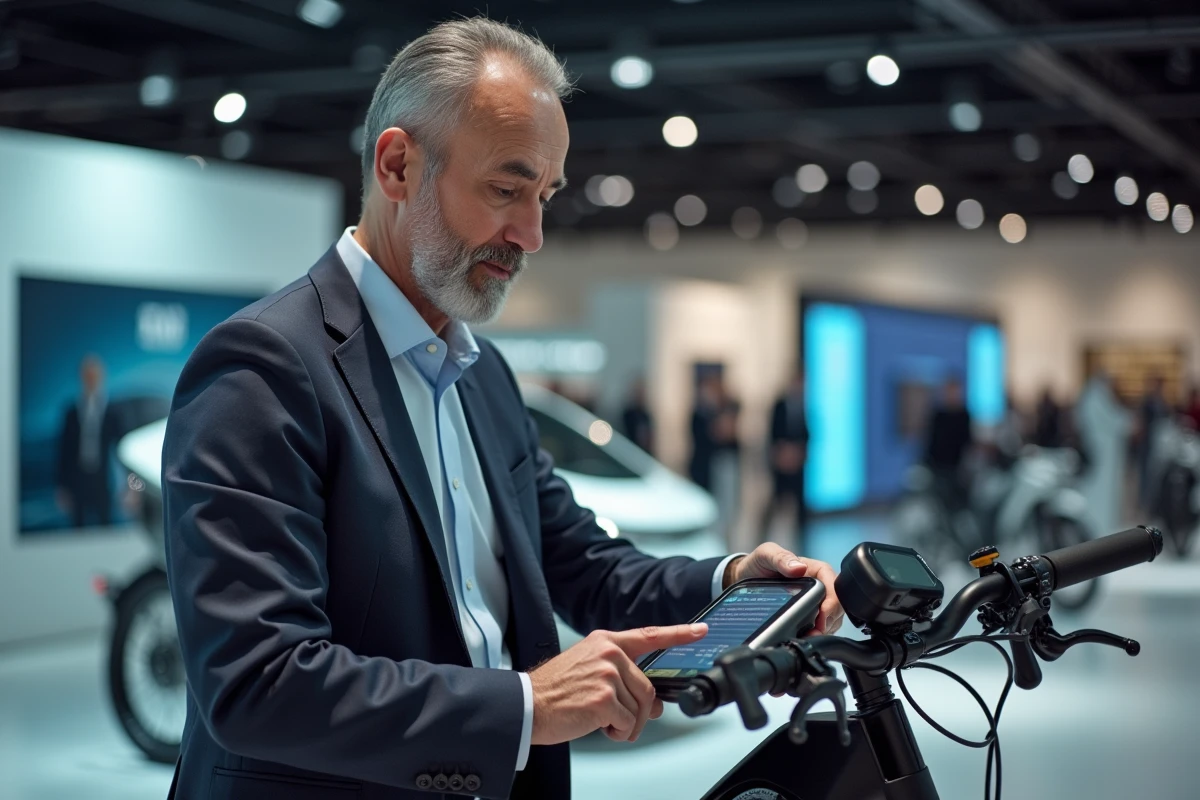
Ultra-fast charging, next-generation batteries, connected mobility: a focus on technologies transforming electromobility
Ultra-fast charging concretely meets drivers’ expectations regarding range and downtime. On major routes as well as in cities, new charging stations deliver up to 350 kW. As a result, a break of just a few minutes is enough to regain a large part of the battery capacity. This long-awaited technical progress reshuffles the cards of daily mobility.
Next-generation batteries are game changers. Solid electrolyte models offer higher energy density, increased safety, and enhanced longevity. Laboratories are also exploring alternative materials to reduce dependence on lithium and critical resources. These advancements pave the way for a more resilient and democratic electric mobility.
At the same time, connected mobility is gaining ground. Vehicles are becoming true digital platforms, capable of interacting with infrastructure, planning charging via apps, or optimizing routes through artificial intelligence. Data, collected and analyzed in real-time, simplify the use of electric vehicles throughout the territory.
Here are some examples of technologies and uses that are accelerating the transformation of the sector:
- Bidirectional charging: the vehicle can now power the electrical grid and participate in the overall energy balance.
- Mass deployment in urban areas and ongoing development of charging stations accessible to all.
- Solutions dedicated to electric bikes: removable batteries, shared charging stations, innovative services for urban two-wheelers.
Electromobility is advancing, driven by innovation and collective will. As technologies intertwine, the landscape is reshaping. It remains to be seen how far this dynamic will take us, and who will be able to take the sharpest turn.