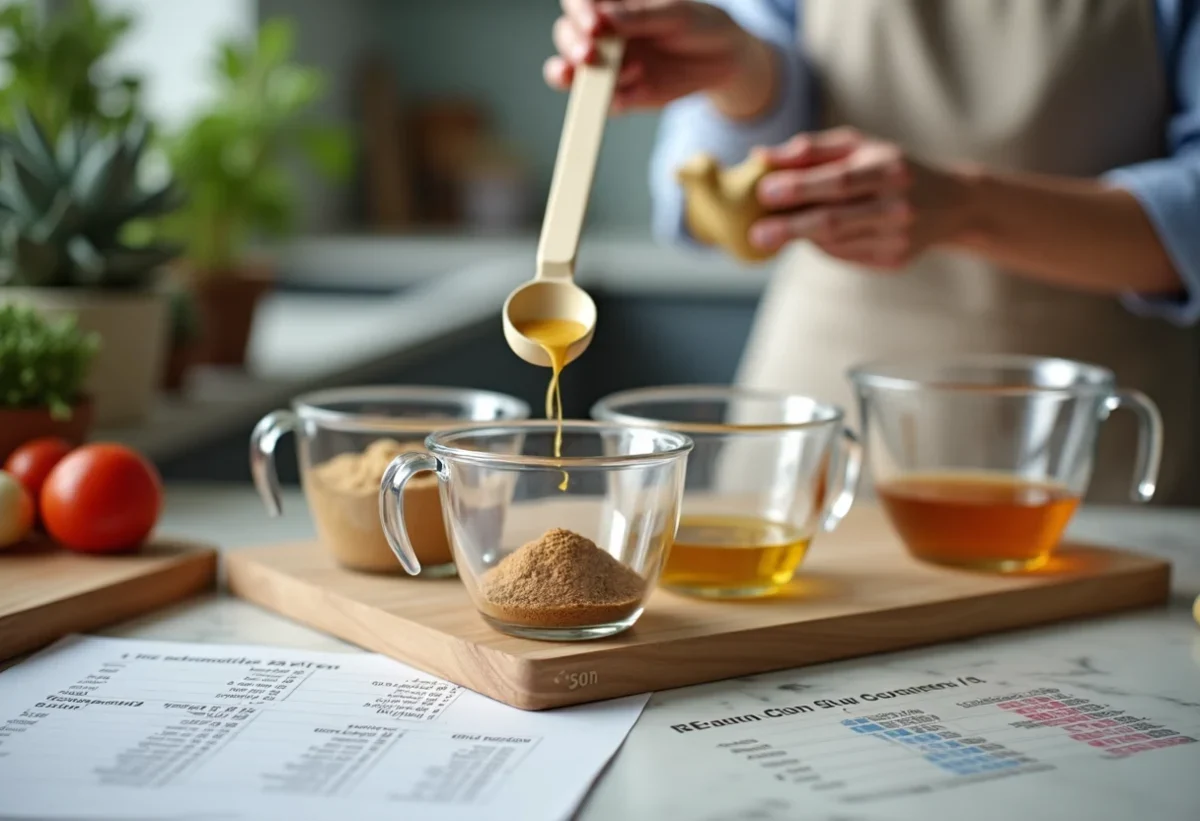
When embarking on the preparation of a new recipe, it is not uncommon to encounter unfamiliar measurements and weight units. Between grams, cups, ounces, and milliliters, confusion can quickly set in, especially when following recipes from international sources.
To avoid mistakes and simplify tasks in the kitchen, a few practical tips can make all the difference. Accurately converting measurements not only saves time but also ensures the success of your dishes. Here are some tips to navigate smoothly between different units and successfully execute your recipes.
Common Measurement Units in Cooking
Measurement units in cooking can quickly become a headache. Between centiliters, liters, and milliliters, it’s easy to get lost. However, mastering these conversions is essential for successful recipes.
Liquid Volumes
Liquids are primarily measured in centiliters (cl), milliliters (ml), and liters (l). Here are some common conversions:
- 1 cl = 0.01 l
- 1 ml = 0.001 l
- 1 l = 1000 ml
These measurements facilitate the precise calibration of the quantities required for your culinary preparations. A graduated measuring cup is ideal for measuring water, milk, or broths.
Solid Ingredients
For solid ingredients such as flour, sugar, or dried fruits, a kitchen scale ensures the necessary precision. Converting 20 cl to grams can be tricky, as it depends on the density of the ingredient. Use conversion tables to obtain exact equivalents between different measurement units.
| Ingredient | 20 cl in grams |
|---|---|
| Sugar | 170 g |
| Flour | 100 g |
| Oil | 180 g |
Precision is fundamental in baking to ensure texture and flavor. A kitchen scale and conversion tables are essential tools for any well-equipped kitchen.
Practical Tips to Simplify Your Culinary Conversions
Use Accurate Tools
To ensure exact measurements, equip yourself with the right utensils. A graduated measuring cup is ideal for liquids such as water, milk, or broths. A kitchen scale is essential for measuring solid ingredients like flour, sugar, or dried fruits. These tools ensure the precision necessary for the success of your recipes.
Consult Conversion Tables
Conversion tables are valuable resources for finding exact equivalents between different units. For example, converting centiliters to grams can vary depending on the density of the ingredient. Here are some common conversions:
- 1 cl of sugar = about 8.5 g
- 1 cl of flour = about 5 g
- 1 cl of oil = about 9 g
These tables allow you to easily adapt recipes to your needs and avoid approximations.
Adopt Mobile Applications
Many mobile applications offer precise and quick conversion features. They often include comprehensive databases with equivalents for various ingredients. Using these apps greatly facilitates the preparation of your dishes by providing instant conversions.
Use Standardized Spoons and Cups
Tablespoons, teaspoons, and cups are commonly used measurement units in cooking. Here are some practical equivalents:
- 1 tablespoon = 15 ml
- 1 teaspoon = 5 ml
- 1 cup = 240 ml
These standardized units simplify the measurement of ingredients without requiring complex conversions. Use them for quicker and more precise recipes.