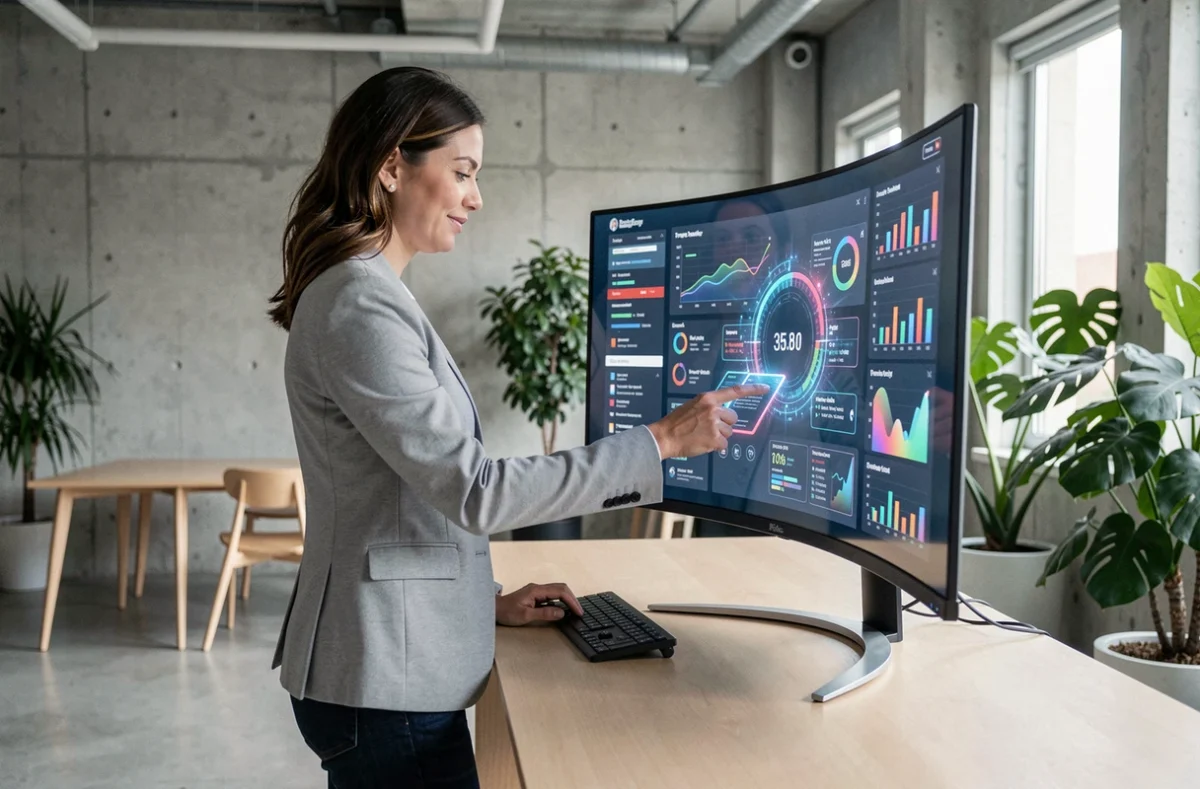
Your phone suggests a route before you’ve even entered an address. Your smartwatch detects an irregular heartbeat while you sleep. These once-unremarkable everyday moments rely on layers of technology that are evolving at a rapid pace. New technologies are transforming our lives far beyond the screen: they are reshaping work, healthcare and education, while raising practical questions about energy, skills and equal access.
The hidden costs of digital technology: energy, skills and device lifespans
Have you ever wondered what physically happens when you ask a voice assistant a question? Your request travels to a data center, sometimes thousands of miles away. These centers use electricity not only to process requests but also to keep their servers cool around the clock.
The growth of data centers is putting pressure on electricity grids, a trend documented by the International Energy Agency (IEA). Publications and analyses from media outlets specializing in innovation and energy closely track these changes, as seen at https://www.ei-mag.com.
Every AI request has a real energy cost, even if the end user never sees it on their bill. That cost is shared between the service operator, the electricity provider and, ultimately, the environment.
Energy is not the only issue. The lifespan of digital devices is another blind spot. The European Commission has launched a consultation on product repairability, signaling that the disposable design of smartphones and laptops is becoming a policy issue. This is not yet an adopted requirement, but a preparatory step toward more sustainable design rules.
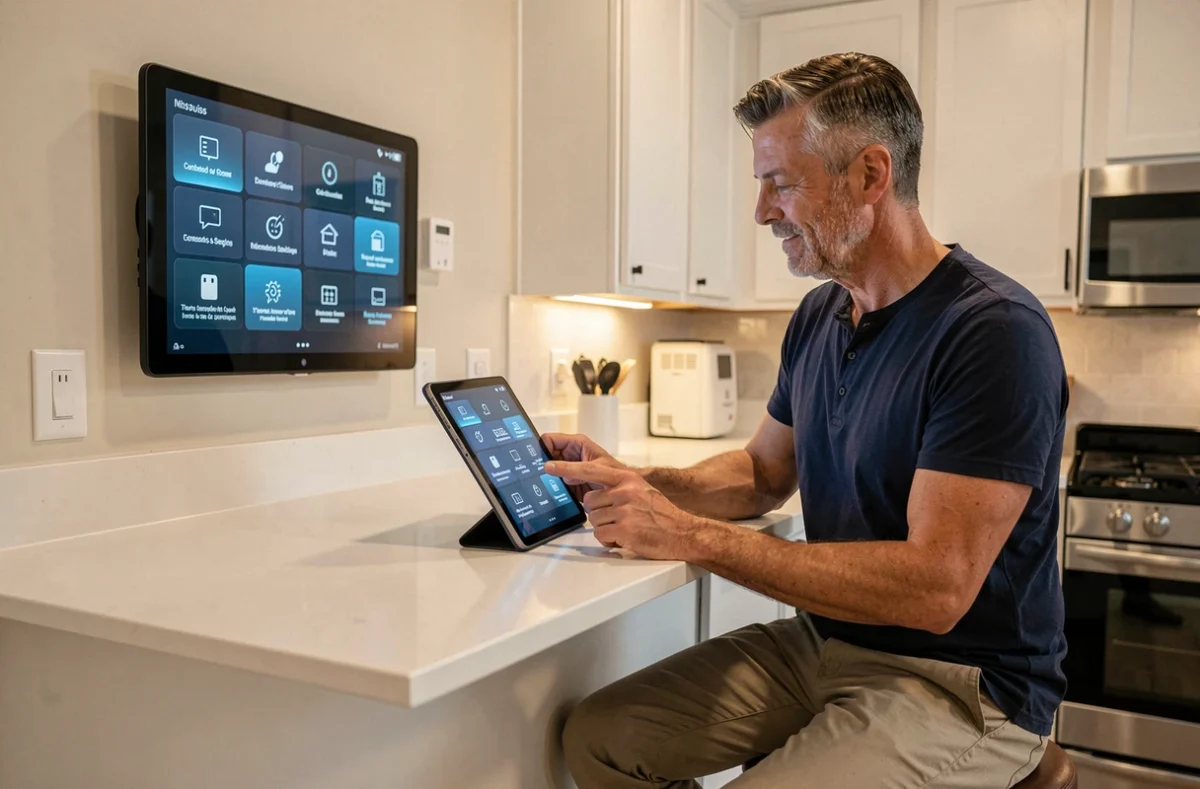
When it comes to skills, digital adoption is uneven. A European Central Bank survey shows that gaps in access and proficiency vary considerably across worker groups. A manager accustomed to collaborative tools approaches AI differently from a tradesperson or field worker. It would be inaccurate to present digital transformation as the same experience for everyone.
Artificial intelligence at work: real-world adoption and practical limitations
AI is making inroads at work, but its use is often limited or experimental. The ECB survey indicates that companies are investing in employee training, not just in tools. That is a positive sign: technology alone is not enough without human support.
What does AI in the workplace actually look like today? Consider a simple example. Software sorts hundreds of job applications in seconds, a task that would take a recruiter several days. The time savings are clear. But the software cannot assess motivation or spot an unconventional career path that could bring creativity.
- Automated document sorting: emails, invoices and résumés. AI excels at repetitive, high-volume tasks, but requires supervision to prevent classification errors.
- Writing and translation assistants: they speed up the production of everyday text, while still requiring human review for nuance and accuracy.
- Predictive analysis in industrial maintenance: sensors detect wear on a part before it fails, reducing production downtime. However, the model must be trained on data representative of the machinery it will be used with.
These applications reveal a recurring pattern: AI increases processing capacity but does not replace judgment. The companies that get the most out of these tools are those that train their teams alongside the technology rollout.
European AI regulation: what the new rules change
Europe has chosen to regulate artificial intelligence according to levels of risk. The European AI Regulation (AI Act) is being phased in. It sets out transparency obligations for certain systems and specific requirements based on the role of the parties involved and the level of risk identified.
In practice, this means that résumé-screening software (classified as high-risk) will have to meet stricter rules than a customer service chatbot. Providers will need to document training data, disclose known biases and allow human oversight of sensitive decisions.
The regulation sets different obligations depending on whether an organization designs, deploys or uses an AI system. A software developer does not have the same responsibilities as a company that incorporates the software into its recruitment processes.
For legally binding dates and obligations, the official text of the regulation and European Commission resources remain the reliable sources. Timelines published by private companies may oversimplify certain nuances.

Digital healthcare and education: tangible benefits and persistent divides
Telemedicine illustrates the two sides of digital transformation. A patient in a rural area can consult a specialist without traveling hundreds of miles. AI-assisted diagnostic tools are analyzing medical images with increasing accuracy.
In education, online learning platforms make it possible to complete a career-focused course from home. Interactive courses adapt their difficulty to each learner’s pace.
But these benefits depend on reliable internet access, a working device and a basic level of digital confidence. Without these prerequisites, digital technology widens inequalities instead of reducing them.
- In healthcare, older patients or those with limited access to devices may struggle to use online appointment portals, delaying their access to care.
- In education, students from households without a reliable internet connection are more likely to fall behind in distance learning programs.
- At work, employees whose jobs are rapidly becoming digital without adequate support risk being left behind by colleagues who have already received training.
Sharing the benefits of digital technologies more equitably requires practical action: funding ongoing training, extending device lifespans and ensuring high-quality internet access across the entire country. Information technology does not automatically create progress. Collective decisions about investment, regulation and training determine whether digital tools benefit the wider population or concentrate their advantages among those who already know how to use them.