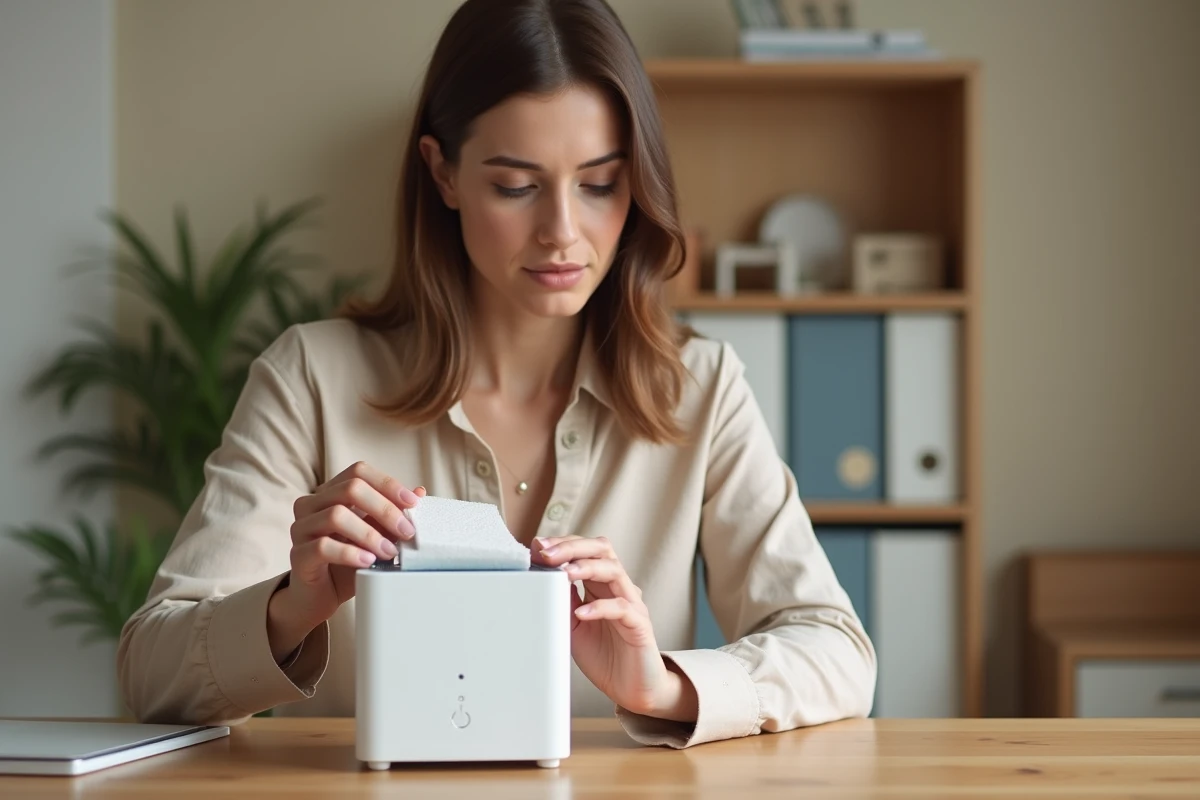
A mini air cooler Silvercrest sold at Lidl is based on a simple principle: water evaporates through a filter, and a fan blows the cooled air. The quality of this filter directly affects the feeling of freshness produced. When the device seems less effective after a few weeks of summer use, the cause is not always obvious: a clogged filter, a poorly filled tank, or excessively high ambient humidity can produce the same result.
This guide measures the impact of each factor and details concrete actions to maintain the device’s performance.
Performance Loss Diagnosis: Filter, Water, or Ambient Humidity
The most common complaint about this type of device can be summed up in one sentence: “it no longer cools.” Before ordering a new filter, three variables should be checked in a specific order.
| Variable | Typical Symptom | Quick Test | Corrective Action |
|---|---|---|---|
| Clogged or Dry Filter | Normal air flow but no perceived drop in temperature | Remove the filter, touch it: if it is dry or rigid, it is no longer absorbing water properly | Clean with clear water or replace |
| Insufficient Water Level | The device blows warm air, the tank sounds hollow | Visually check the level in the tank | Fill to the mark indicated in the manual |
| High Ambient Humidity (beyond 60-70%) | The device operates normally but the feeling of freshness is almost nonexistent | Use a basic hygrometer placed nearby | Ventilate the room or temporarily stop using the cooler |
A cooler works by evaporation. The more humid the ambient air is, the less evaporation produces cooling. On stormy days or in a poorly ventilated room with laundry drying, the device runs idle without the filter being the cause.
By comparing the filter for mini air cooler Silvercrest with those of other devices in the same segment, it is clear that the maintenance logic remains the same: the filter must stay moist and clean for the evaporation cycle to work.
Install the Silvercrest Filter Without Installation Errors
The official manual for the SilverCrest STLH 8 B2, published in several languages including French, describes a procedure in a few steps. It seems obvious, but two common mistakes often occur.
Installation Steps
- Unplug the device and remove the water tank from the back or bottom depending on the model
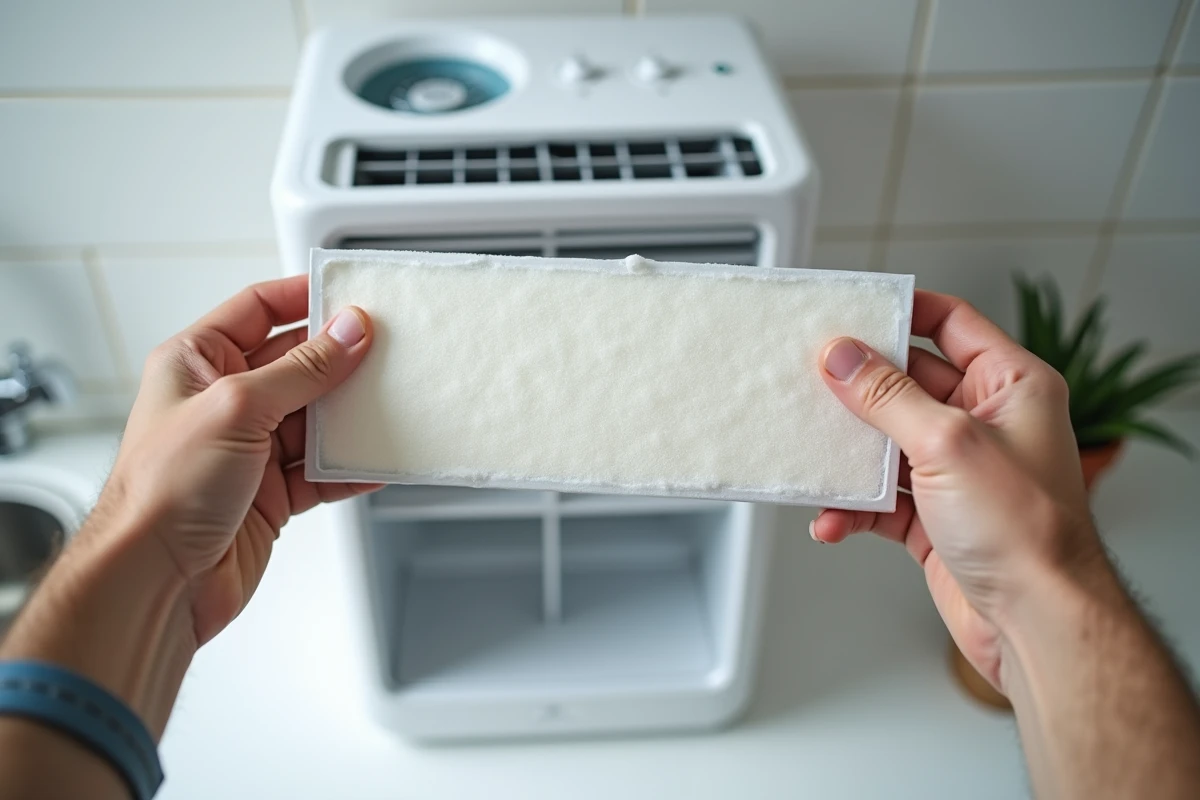
- Remove the used filter by sliding it out of its housing (no clips to force on most Silvercrest models)
- Soak the new filter in cold water for a few minutes before inserting it, to initiate absorption
- Replace the filter in the housing, ensuring it is properly seated, with no lateral play
- Fill the tank, replace it, and plug the device back in
A dry filter inserted will take longer to produce an effect. Pre-soaking shortens this delay and prevents the user from prematurely concluding that there is a defect in the device.
Common Mistake: Confusing Filter Types
The Perplexity research confirms a point that SERP results do not clearly address: there is a distinction between the pre-cooling filter (the main moistened buffer), the dust filter (sometimes just a simple grid), and the maintenance of the tank itself. On the mini Silvercrest cooler, the main filter is the one that must remain constantly moist. The dust grid, on the other hand, is cleaned dry with a soft brush.
Installing a dust filter instead of the evaporation filter (or vice versa) nullifies any cooling effect. Checking the exact model reference before ordering a replacement avoids this confusion.
Frequency of Cleaning and Replacing the Filter During Actual Summer Use
Manufacturer instructions indicate theoretical cleaning intervals. In practice, intensive use during heat peaks changes the game.
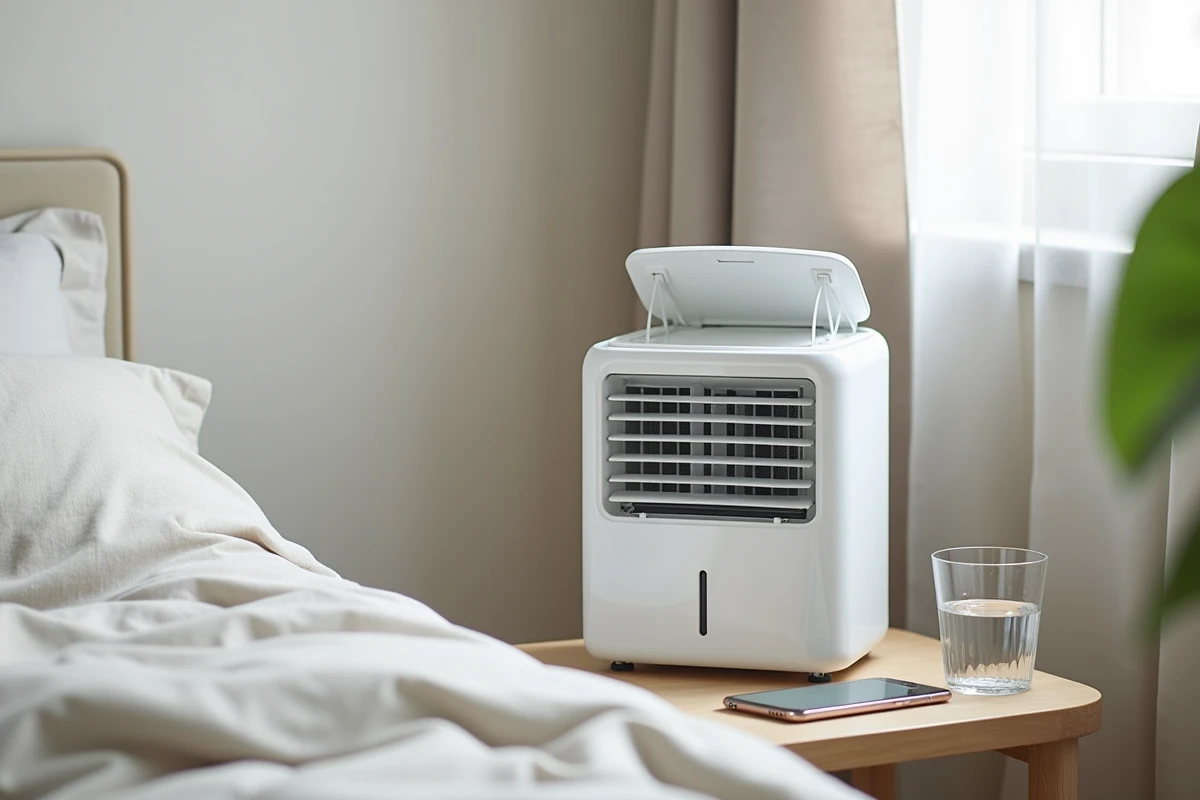
When the device runs for several hours a day in a dusty room (office with an open window facing the street, bedroom with carpet), the filter accumulates visible deposits within one to two weeks. A filter that turns yellow or emits a musty odor must be cleaned immediately, regardless of how many days have passed since the last maintenance.
Cleaning the Evaporation Filter
The action is simple: rinse the filter under a stream of lukewarm water without soap or detergent. Chemicals alter the absorbent structure of the material and reduce its evaporation capacity. Let it air dry before replacing it if the device is not used in the following hours.
A paper or cellulose filter gradually loses its absorption capacity after several cleaning cycles. Replace the filter as soon as it no longer swells upon contact with water is the most reliable criterion for deciding on the change, rather than an arbitrary number of weeks.
The Tank, an Overlooked Factor
A tank where water stagnates promotes the growth of bacteria and microscopic algae. These deposits migrate to the filter and clog it prematurely. Emptying and rinsing the tank every two to three days during heavy use extends the filter’s lifespan.
Limitations of the Silvercrest Mini Cooler Depending on Room Conditions
Unlike a portable air conditioner that uses refrigerant gas to lower the room temperature, the Silvercrest mini cooler can only gain a few degrees in a limited area. The filter, no matter how clean, does not compensate for an unfavorable environment.
Effectiveness drops significantly in a closed room without air renewal. Evaporation gradually saturates the air with humidity, and the cooling cycle stops by itself. Cracking a window or placing the device near a source of natural ventilation maintains a sufficient differential.
The price of the Silvercrest mini cooler at Lidl positions it as a supplementary solution for small areas. Expecting it to cool a large living room is like asking it to do something it was not designed for. A well-maintained filter optimizes performance but does not turn the device into an air conditioner.
The tipping point is the room’s relative humidity: beyond a high threshold, even a new filter in a full tank will only produce a breeze of air barely cooler than the ambient air. A hygrometer costing a few euros remains the best complementary investment to know when the cooler is worth turning on.