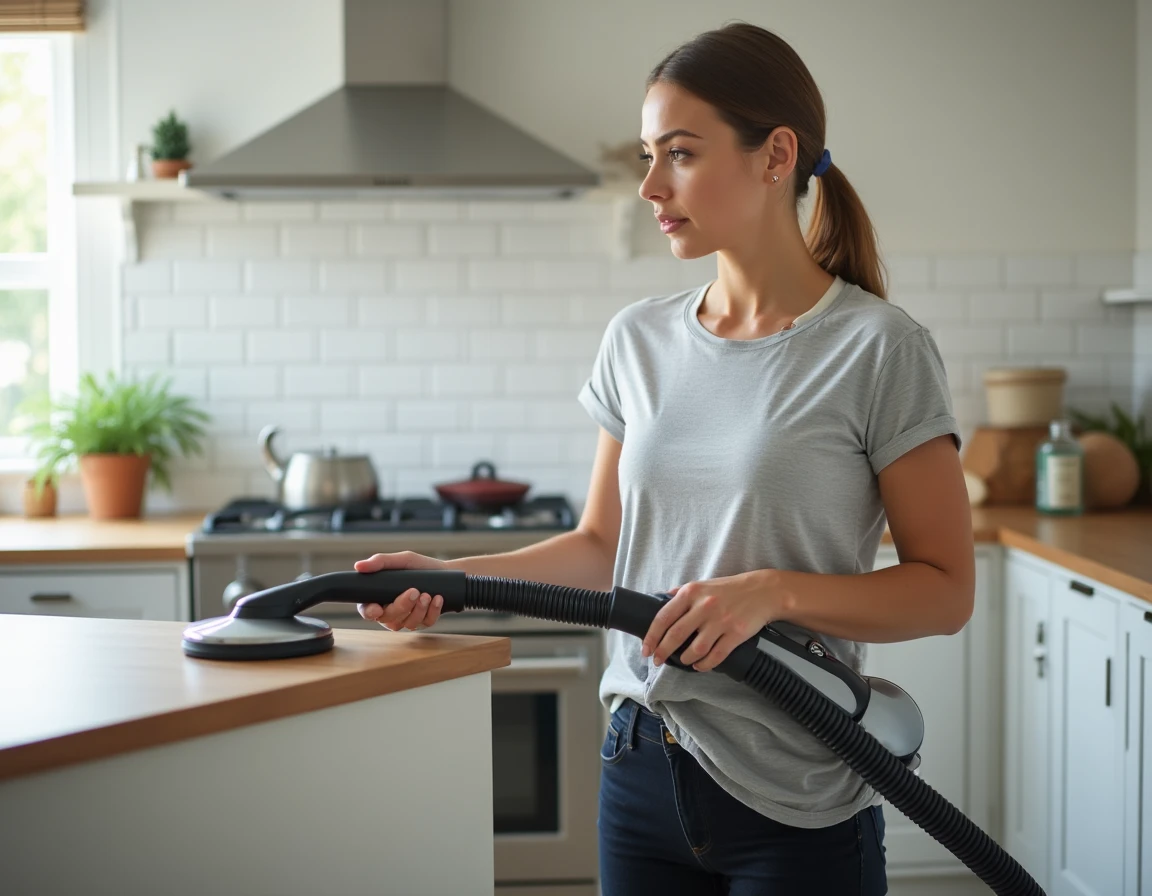
We take the Silvercrest out of its box, fill the tank, press the button, and after a few seconds, the steam barely comes out or not at all. This scenario often occurs with first-time users of this steam cleaner sold at Lidl.
The problem almost never comes from the device itself, but from the order in which the steps are followed. With a correct startup routine and a thoughtful cleaning path, you can get much more out of those few minutes of steam autonomy.
Silvercrest Cleaning Routine: Plan Your Path Room by Room
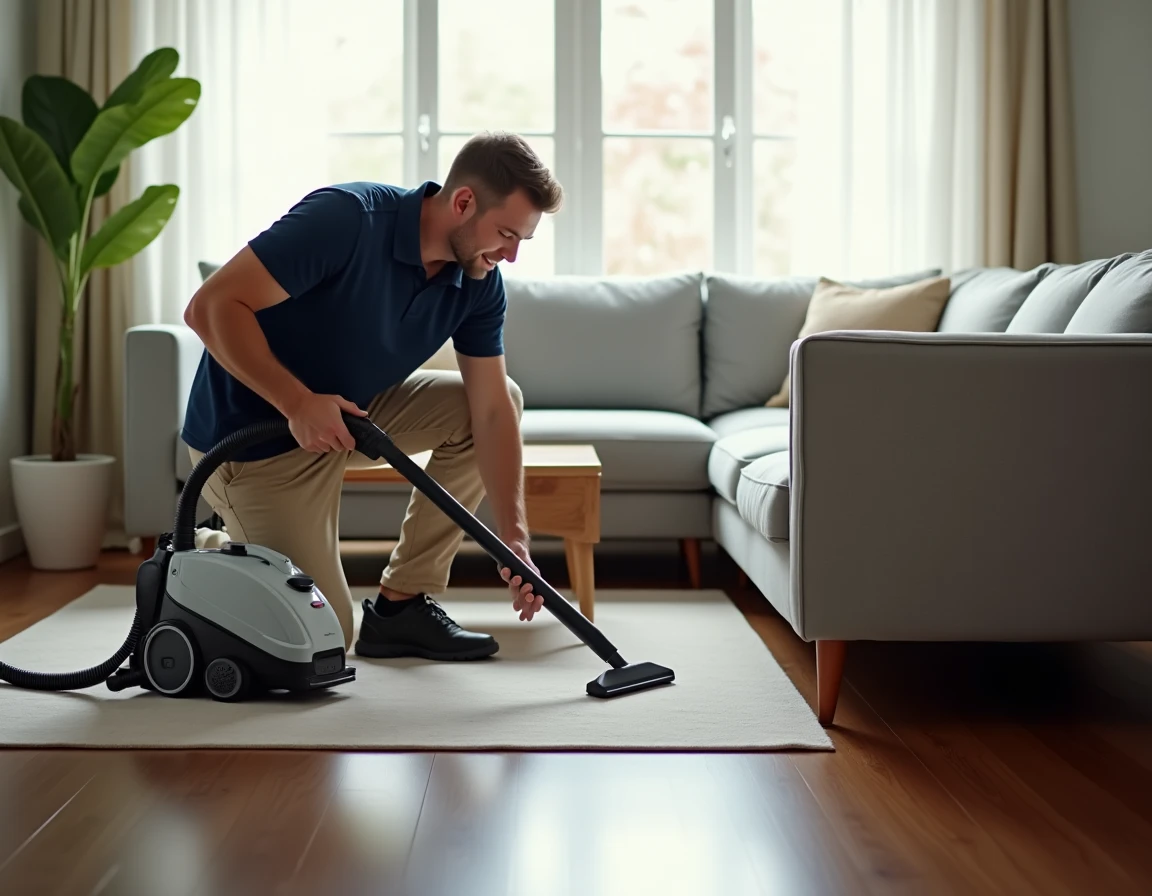
User feedback since 2024 converges on one point: the best results are obtained by starting with the bathroom and kitchen, the two rooms where grease, limescale, and dirty joints most justify the use of steam. With a limited autonomy of about twelve minutes, wasting steam on a clean hallway before tackling the difficult areas is a common mistake.
Specifically, we prepare the surfaces before plugging in the device. We clear the countertop, remove the bath mat, and clear around the toilet. The steam cleaner does not vacuum: anything lying on the floor slows down the process and wastes steam unnecessarily.
Next, we follow a logical circuit. Bathroom (tile joints, faucets, shower wall), then kitchen (stovetops, sink, backsplash), and possibly the hard floors of the living room if the tank allows. This path from the dirtiest to the cleanest maximizes every gram of heated water.
This detailed logic can be found in the user manual for the Silvercrest steam cleaner on Bobo Le Brico, which describes the startup process step by step for beginners.
Silvercrest Steam Cleaner Accessories: Which to Use and When
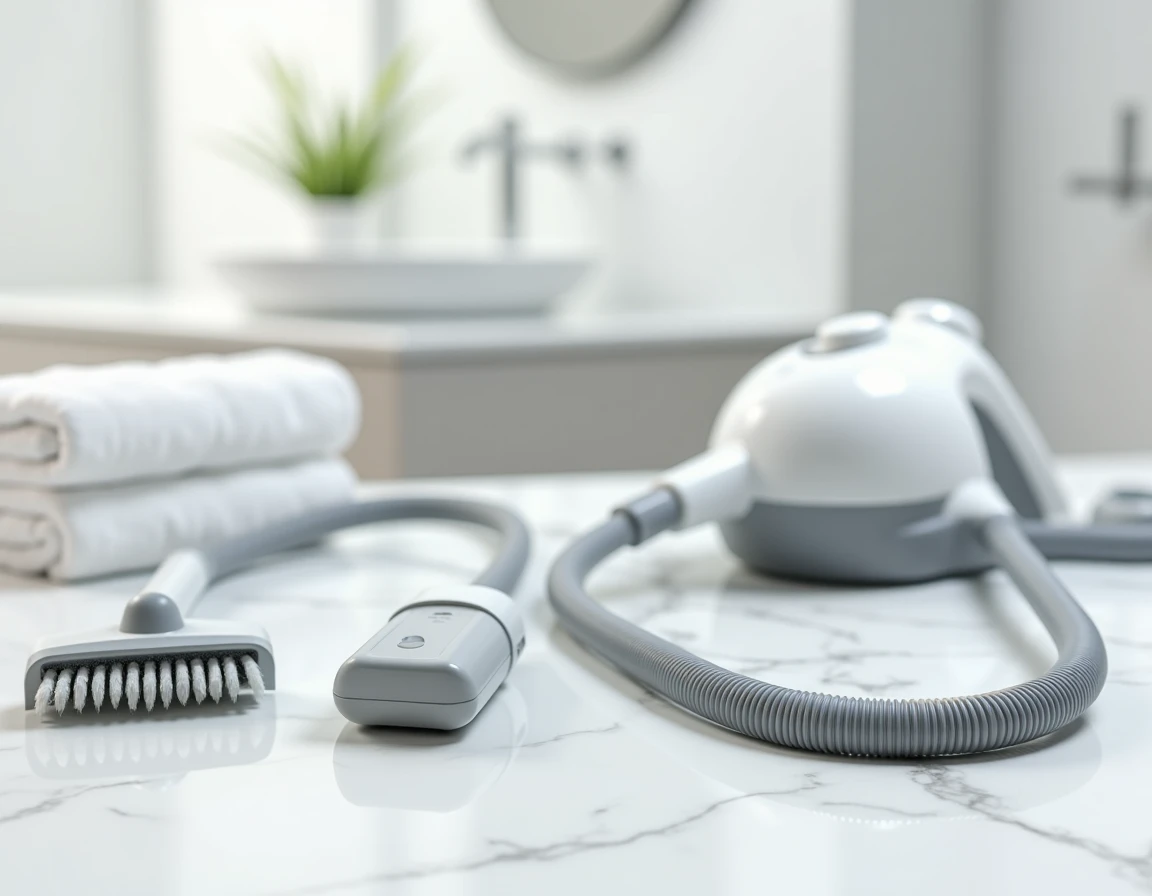
The Silvercrest box contains several nozzles and cloths. The temptation is to leave everything in the bag and use only the main nozzle. This means missing out on half of the device’s usefulness.
Three accessories deserve special attention:
- The carpet adapter improves the glide of the device on fibers and allows steam to penetrate deeper. Some users use it almost exclusively to refresh carpets and rugs, replacing traditional shampooing.
- The window squeegee provides streak-free surfaces in two passes (up then down), provided the steam flow is well dosed. Too much steam drowns the glass, while too little leaves residues.
- The textile cloths clip onto the floor head. One clean cloth should be used per room, not one for the whole house. If you only have two, start with the dirtiest room and flip the cloth for the second area.
The reflex to adopt: clip the appropriate accessory before heating the device, not after. Changing nozzles on a hot device increases the risk of burns and wastes steam during the process.
Vinegar Descaling of the Silvercrest: The Step Many Forget
Limescale is the primary enemy of a steam cleaner with a small tank. When the steam flow decreases and the device takes longer to heat up, we often think of a malfunction. In most cases, a simple descaling solves the problem.
The classic method involves filling the tank with a mixture of water and white vinegar, then letting it sit. Recent manuals and guides emphasize a often overlooked point: rinse the tank by running the device with clear water after descaling. Without this step, vinegar residues remain in the circuit and cause unpleasant odors during the next cleaning.
Steam rinsing is simple: empty the tank after the vinegar pass, fill it with tap water, and let the device produce steam for one to two minutes over the sink. Discard this water. The circuit is clean.
The frequency of descaling depends on the hardness of the water in your area. Feedback varies on this point, but in hard water areas, descaling every four to five uses seems reasonable to maintain good flow.
Common Mistakes When First Using the Lidl Steam Cleaner
Some traps consistently occur with beginners and deserve to be clearly listed.
- Filling the tank to the brim. Most Silvercrest models have a maximum level indicator. Exceeding it prevents proper pressure buildup and can cause water spitting instead of steam.
- Using the steam cleaner on unsealed parquet or raw wood. Steam swells the wood fibers and can cause irreversible deformations. Stick to non-porous hard floors: tiles, stoneware, linoleum, vinyl.
- Leaving the device plugged in between rooms while tidying up. The tank continues to heat, and steam escapes. Turn off the device for any movement longer than thirty seconds.
- Using cleaning products in the tank. The steam cleaner works with pure water, without adding detergent. A chemical in the circuit damages the seals and voids the warranty.
The first complete cleaning always takes longer than subsequent ones. You fumble with the accessories, search for the right flow, and discover which surfaces respond well to steam. After two or three sessions, the routine sets in and each session rarely lasts more than fifteen minutes for a standard bathroom and kitchen.
The best advice for starting is to dedicate the first use to a single room, without rushing. You learn how the device behaves, test each accessory, and identify surfaces to avoid in your home before launching into a complete cleaning.