
The number 81 often appears on leather jackets, windshield stickers, and tattoos in the world of motorcycle clubs. Behind this number lies a simple alphanumeric code: the 8 corresponds to the eighth letter of the alphabet (H), and the 1 to the first (A). In other words, 81 means “HA,” for Hells Angels.
Wearing a support 81 or displaying it on a vehicle is a public declaration of support for this club, with all the implications in terms of rules, loyalty, and consequences.
Numerical Codes of Motorcycle Clubs: 81, 69, and Others
Have you ever noticed a “69” on a biker’s vest? It’s not a joke: among the Mongols, 69 refers to the letters M and G (sixth and ninth positions in the alphabet). Each outlaw club uses its own code to recognize each other among insiders.
The difference in strategy is telling. The 81 of the Hells Angels has become so famous that it attracts the attention of law enforcement during international customs checks. According to Europol’s 2026 report on Outlaw Motorcycle Gangs, rival clubs like the Mongols prefer more discreet codes to limit this visibility. The 81, on the other hand, functions almost like a trademark: it is openly claimed, making it both a symbol of pride and a target.
To delve deeper into the rules and meaning of support 81, it is essential to understand that this code goes beyond a simple wink between bikers. It engages the wearer in a network of specific duties.

Support 81 Patch: What You Can and Cannot Wear
A “Support 81” patch is not a fashion accessory. Wearing it without permission from the local club exposes one to direct consequences, ranging from confiscation of the garment to physical confrontation.
Here are the distinctions to know:
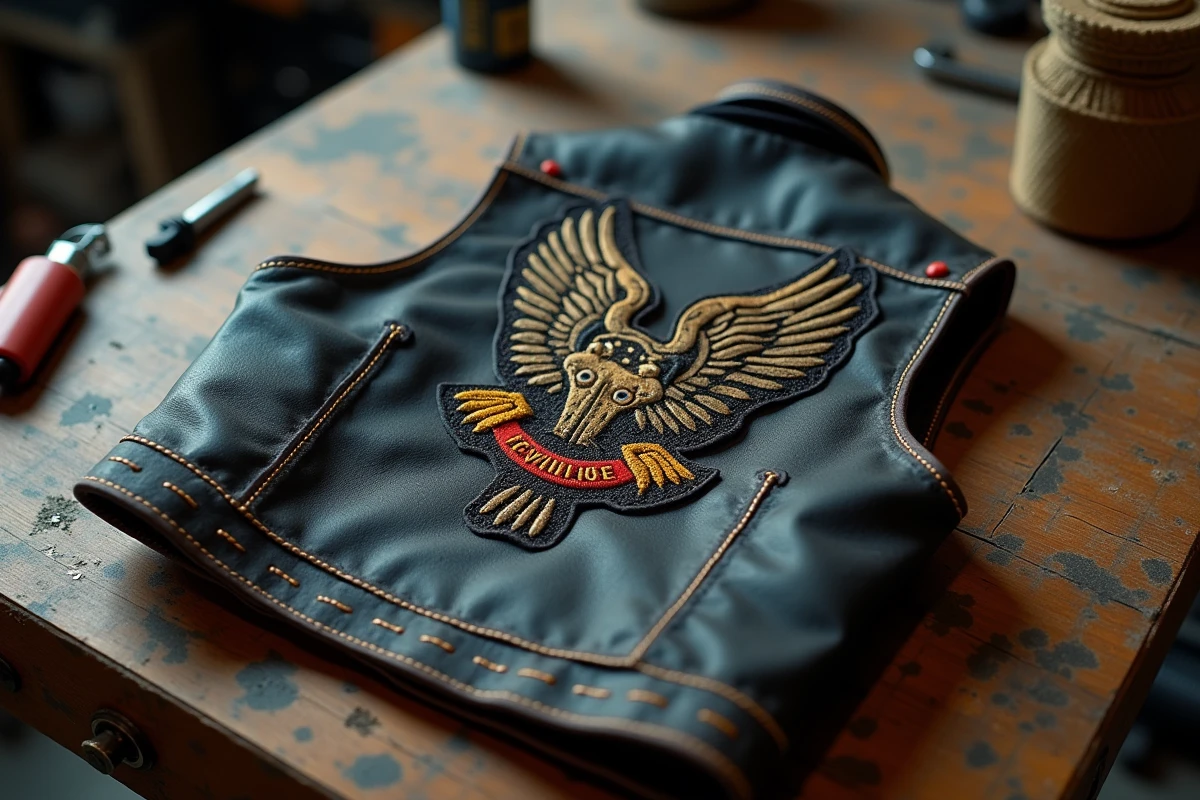
- The “Support 81” patch is reserved for sympathizers recognized by a local chapter. It does not confer any member status but indicates a validated connection with the club.
- Full colors (the “three-piece patch” with the club name, logo, and city) are exclusively reserved for full patch members. Wearing them without the right constitutes a serious offense in outlaw culture.
- Merchandise sold online (t-shirts, caps) is multiplying, but the club does not systematically recognize these items. The OCRBV has reported an increase in seizures of counterfeit support 81 items since 2024, linked to the rise of unauthorized sales online.
Wearing an authentic support 81 means that the local chapter knows you. Buying a patch online does not replace this validation. This is a nuance that many novices underestimate.
Probation and Loyalty: The Journey to Becoming Support 81
Becoming an official support does not happen over a weekend. The journey typically starts with a “hangaround” status: you frequent the club, participate in events, and show your reliability. If a member sponsors you, you move to the “prospect” stage.
The probation period has lengthened in European chapters. The “Inside the Angels” investigation aired by BBC Panorama in November 2025 reports that probation now exceeds 18 months on average in Europe, compared to shorter durations a few years ago. The reason: police infiltrations have pushed clubs to strengthen their loyalty checks.
What is Expected of a Prospect on a Daily Basis
The prospect performs logistical tasks: cleaning the venue, organizing outings, mandatory attendance at meetings. They do not have voting rights and do not wear the full colors. However, they do wear a prospect patch, visible but distinct.
The transition to support status, and eventually to full member status, relies on a unanimous or nearly unanimous vote from the chapter. A single negative vote can be enough to block a candidacy. Loyalty takes precedence over seniority in this system.
Digital Support 81: QR Codes and Encrypted Apps in Scandinavia
In Scandinavian countries, several governments have tightened their legislation on the insignia of outlaw motorcycle clubs. Denmark, for example, has adopted measures prohibiting the display of distinctive signs related to clubs in certain public spaces. In response to these restrictions, an emerging trend is appearing: the shift to digital.
Some Scandinavian chapters are experimenting with QR codes printed on neutral clothing. Scanned with a phone, these codes redirect to an encrypted authentication page that confirms the wearer’s status with the club. Others use encrypted messaging apps to validate membership in real-time.
Support 81 becomes invisible to the naked eye, while remaining verifiable among insiders. This shift to digital poses an unprecedented challenge to law enforcement, accustomed to identifying affiliations through visible patches on vests.
This evolution remains marginal and primarily concerns areas where legislation is most restrictive. In most countries, the physical patch retains its symbolic value. But the trend illustrates the adaptability of these organizations in the face of legal pressures.
Counterfeiting and Legal Risks of Support 81 in France
In France, wearing a support 81 is not illegal in itself. No law prohibits the simple display of a digital code or a support patch. Legal difficulties arise when this wearing is associated with collective behaviors sanctioned by the penal code: intimidation, participation in a violent group, or carrying a weapon.
The real risk for an individual lies elsewhere. Buying a counterfeit support 81 can provoke a direct conflict with the club, which considers any unauthorized use of its symbols as a form of usurpation. The OCRBV’s 2025 report confirms that seizures of counterfeit patches sold online have multiplied, indicating that the phenomenon is growing.
- A patch purchased on an e-commerce site has no value in the eyes of the club.
- The unrecognized wearer is exposed to retaliation from the local chapter.
- Law enforcement may use the wearing of this patch as contextual evidence in an investigation, even if the patch alone does not constitute an offense.
Support 81 operates as a closed system. The symbol has legitimacy only if it is granted by the club itself. Any attempt to circumvent this, whether through online purchase or handmade production, collides with internal rules that the law does not regulate but that the community enforces rigorously.