One hectare totals exactly 10,000 square meters, without exception or rounding. Yet, confusion often remains between these units, making area calculations sometimes risky during project planning.
Some regulations impose precise divisions, while others allow surprisingly wide margins. This contrast, often overlooked, directly influences space management and land valuation. Better understanding these measurements avoids costly mistakes, both for optimization and regulatory compliance.
What does a hectare really correspond to? Understanding the area for better planning
A hectare leaves no room for approximation: it spans 10,000 square meters. This unit, central to French land practices, is essential in real estate, agriculture, urban planning, or natural space management. It is impossible to escape this reference when it comes to evaluating or valuing land.
To get a concrete idea of the magnitudes at play, a few comparisons are necessary:
- An are represents 100 square meters. Therefore, it takes 100 to make up a hectare.
- The acre, more common in the Anglo-Saxon world, is equivalent to about 4,047 square meters, which is less than half a hectare.
This discrepancy between units changes the game during conversions, directly impacting the profitability of a project or the compliance of a file.
Knowing the precise area of a piece of land allows for adjustments to plans, optimization of building placements, or better distribution of crops. Think of a square with 100 meters on each side: there you go, you visualize a hectare. In some rural areas, this measurement conditions access to aid, building rights, or local taxation.
To delve deeper into the subject, you can consult Tous les Faits for more information: from the history of hectares to the subtleties of the cadastre, including the use of square meters in French real estate. Knowing how to juggle these measurements ensures effective management, without unpleasant surprises or risky calculations.
Hectare/square meter conversion: how to easily find your way?
When it comes to managing or valuing land, the hectare/square meter conversion is an automatic skill to acquire without delay. One hectare is 10,000 square meters flat: to convert, multiply or divide by 10,000, depending on the direction. This simple principle, however, conceals real stakes, particularly in urban planning and land management.
Real estate professionals, surveyors, agronomists, or urban planners rely daily on this equivalence. The precision of measurements becomes essential as soon as one deals with an electronic cadastre or drone remote sensing. An urban planning file, a development project, a land valuation: everything starts with a controlled conversion.
Here’s how digital tools shake things up:
- Spreadsheets, geomatics applications, and cadastre portals facilitate the transition from one unit to another, significantly reducing the risk of error.
For professionals in charge of agricultural plots or building lots, this speed of calculation becomes a true lever of efficiency. One avoids approximations, saves time, and makes reliable decisions.
Mastering the hectare/square meter conversion is the key to a clear understanding of the area, whether for selling, buying, or studying the feasibility of a large-scale project. This mastery is now a professional reflex, serving a more rigorous and strategic management.
Concrete tips to make the most of every square meter of your land
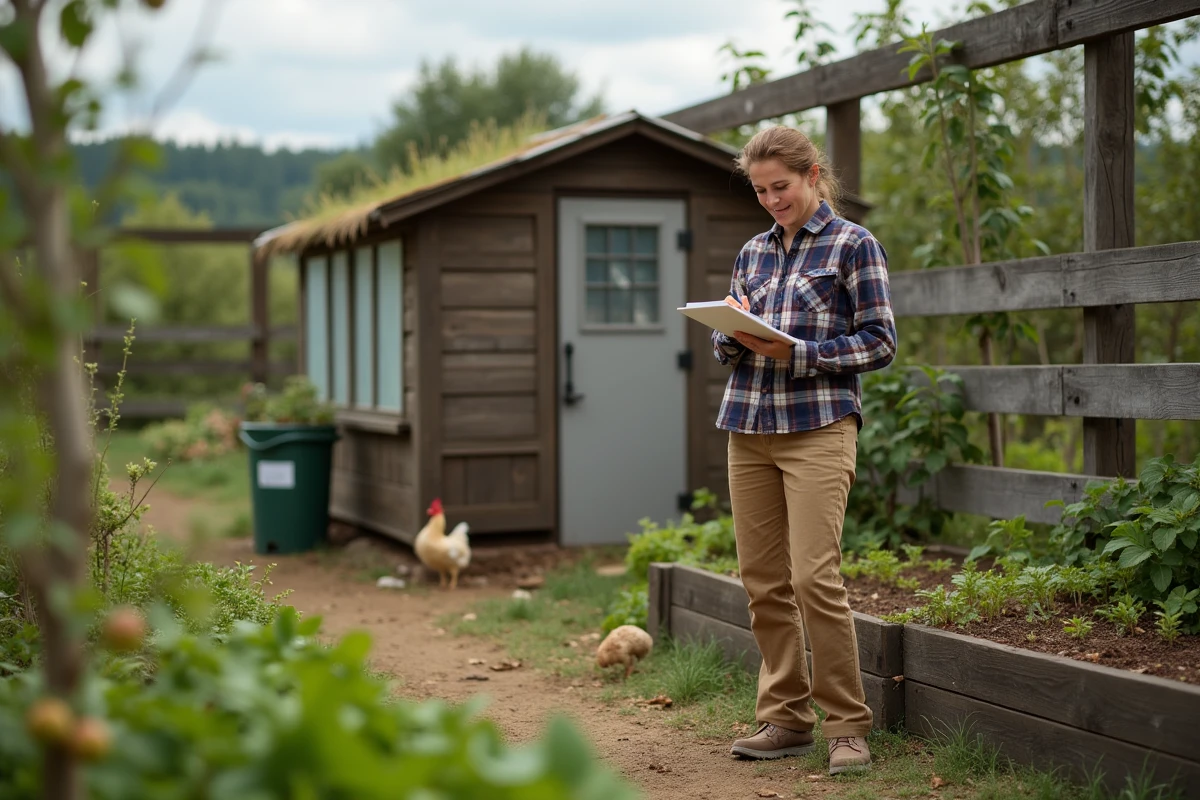
Optimizing a hectare is not a matter of chance: it requires rethinking each space, assigning a specific function to each area, and sometimes reinventing the layout. Several strategies allow you to take advantage of every square meter:
- Designate a distinct place for the vegetable garden, relaxation area, agricultural production, or leisure activities. In some areas, like Seine-et-Marne, organizing plots in strips promotes crop rotation while maintaining the harmony of the landscape.
- Favor compact or climbing plants: fruit hedges, green walls, or espaliers maximize yield without encroaching on ground space, while enriching biodiversity and creating valuable microclimates.
For a residential plot, choosing multifunctional furniture makes a difference: retractable terrace, modular shelter, clever benches with storage. Each item should gain in utility, transforming density into an asset rather than a constraint.
When tackling outdoor development, anticipation serves as a compass. A precise plan, taking into account the terrain, exposure, and soil type, helps avoid overly wide paths or wasted areas. Professionals recommend paying attention to circulation, optimizing crop rotation, and managing irrigation intelligently. Every detail counts: on one hectare, every square meter can generate added value if one knows how to innovate.
One last point to watch closely: the price per square meter. Before any operation, it is better to assess the impact on the overall value of the land, whether for an agricultural project, a real estate investment, or a heritage transformation. Space management then becomes a discipline in its own right, where creativity meets the rigor of numbers.
A well-thought-out hectare is a transformed piece of land: every square meter finds its place, every use makes sense, and the potential of the soil is expressed without reservation. The question remains how far you will go in the art of making the most of it.