A number, a preference, a gesture repeated every spring: the hoe holds the top spot in the hearts of seasoned gardeners. Yet, the hand cultivator, discreet and sometimes underestimated, has plenty of resources for those who know how to tame it. Forget rigid dogmas: here, everyone adjusts according to the soil texture, the age of their crops, or the appearance of the weeds that sneak between the rows.
Change the angle, play with the depth: this is a method that books rarely discuss, but which transforms everything in practice. In the end, these small adjustments shift the work in the vegetable garden into another dimension: the gesture becomes natural, precise, almost instinctive. This finesse marks the difference between sterile fatigue and efficiency; from targeted weeding to seedbed preparation, the garden thrives through this attention to detail.
Hoe and hand cultivator: what are the differences for the amateur gardener?
At first glance, it’s difficult for an untrained eye to distinguish a hoe from a hand cultivator. Yet, everything separates these two allies of manual gardening: history, shape, and especially, usage. The hoe presents several faces, with a flat blade (pan), pointed tongue, and sometimes a mini-fork; it slips between the rows, creates furrows, aerates the soil, incorporates compost, or separates perennials. Some call it a sarclette, rayonnoir, or houette depending on the region, a sign of its long history.
The hand cultivator, on the other hand, plays the simplicity card. Its flat, straight, or slightly curved blade bites into the surface to quickly eliminate unwanted weeds over large areas. Effective for weeding, designed for cleaning flower beds or paths, it stands out for its speed of execution and robustness, offering a “sweeping” effect on the weeds.
All this doesn’t just depend on the blade: the choice of handle matters, whether wood, steel, or composites, to balance comfort, strength, and maneuverability. The price remains affordable for both, ranging from 8 to 40 euros, depending on the range. Far from opposing each other, the hoe and hand cultivator complement one another: the former excels in precision, while the latter shines in surface work.
Even better, knowing how to use a hoe or a hand cultivator requires adjusting the tool, angle, and depth to the context. A gesture that is too vigorous can damage the roots with the hoe; too superficial, and the hand cultivator lets many weeds slip through. Everything hinges on observation: soil condition, plant density, time of year. This adaptability shapes the eye of the true gardener, attentive to underground life as much as to the visible results.
The essential gestures for effective and soil-friendly weeding
Effective weeding does not rhyme with deep plowing. On the contrary, it involves loosening the fine upper layer of soil to stimulate the circulation of water, air, and light, while respecting the small creatures and essential organisms. The golden rule? Do not break the deep structure, but simply break the dry crust and prevent the germination of rebellious weeds.
The hoe, with its fine tongue, targets the roots of unwanted plants between the crops, cutting them off as soon as they appear. The hand cultivator, wider, works on the broad bands of the vegetable garden, uprooting the cohort of spontaneous shoots in one fell swoop. You must learn to gauge your effort: too much power damages the crops, while too much gentleness leaves the field open for weeds.
Here are some guidelines for working the soil without exhausting it or yourself:
- The ideal is to weed on soil that has just been watered or after rain: the soil, soft without being soggy, yields without effort, and the earth does not stick to the blade.
- Keep a light hand: there’s no need to go deeper than five centimeters; that’s more than enough to uproot young weeds and aerate the surface.
- Consider incorporating compost or manure right after using the hoe or hand cultivator: the soil thus receives a real boost without trauma.
Pay attention to your posture: back straight, wide gestures, alternating hands if the effort prolongs. And when the weeding is finished, cover the surface with a bit of mulch or give it a brief watering. This reflex limits evaporation, maintains moisture, and slows the regrowth of unwanted plants. Thus, cultivating productivity does not mean sacrificing the life of the soil; quite the opposite.
Practical tips to make the most of your hoe throughout the seasons
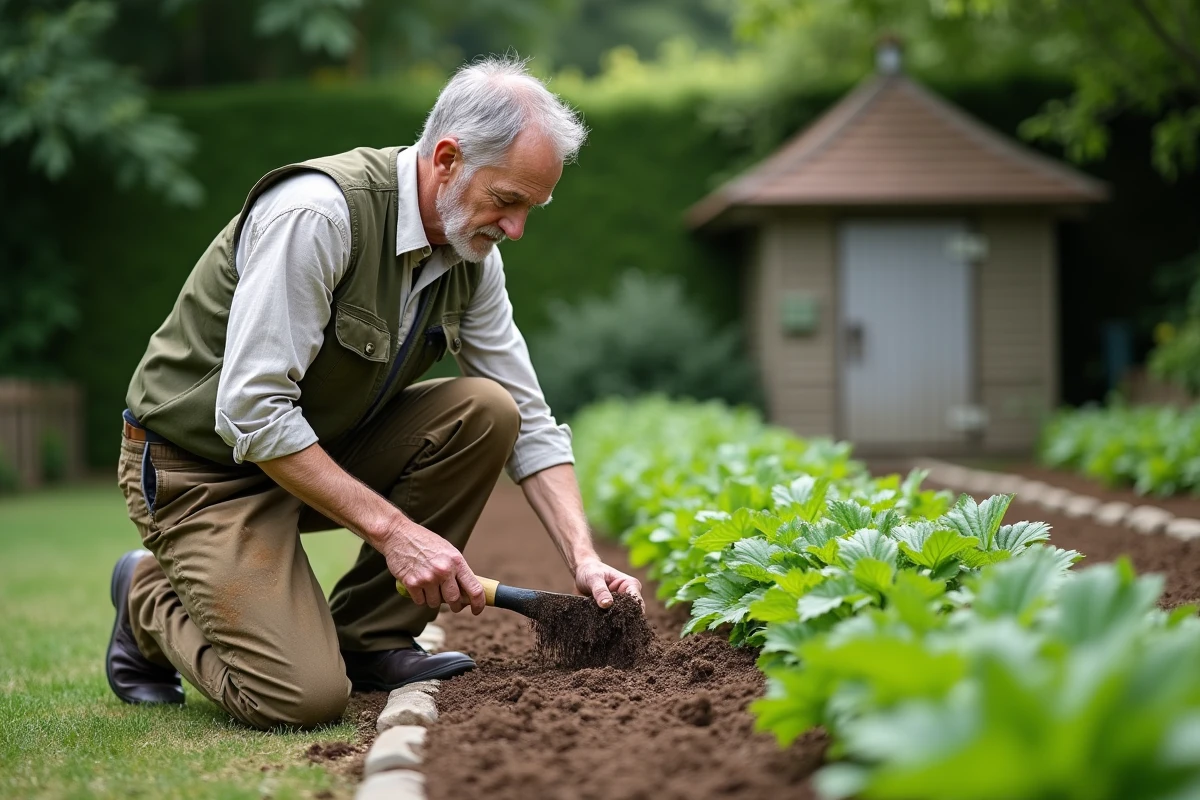
The hoe remains faithful throughout the year. In each season, it meets a specific need: loosening the soil in spring, creating furrows for sowing, weeding between tight rows, or harvesting mature tubers. An urban vegetable garden, a permaculture strip, a flower bed: everywhere, the hoe makes a difference in small spaces and among closely planted crops.
Here are the major uses to keep in mind to utilize the hoe all year round:
- Dividing perennials at the beginning of the season or in autumn to regenerate flower beds and borders.
- Avoiding damage to potatoes or other roots during harvest thanks to the precision of the blade.
- Working in planters, urban bins, and narrow paths, where bulky tools are unsuitable.
Maintaining the tool is also part of the success: remove the soil after each use, give it a little file from time to time, and avoid leaving the handle in moisture. Adjusting the handle size to your morphology reduces fatigue and makes each session more enjoyable. Whether preparing the ground for sowing in spring or mixing compost in autumn, the hoe endures through the years but never betrays its promise of practicality.
Run your fingers along the handle, seek the right angle, and let the signs of the soil speak. One gesture, one adjustment, and there you have it, your vegetable garden is better inspired. Sometimes, it all comes down to listening to what the earth whispers to those who know how to read it.